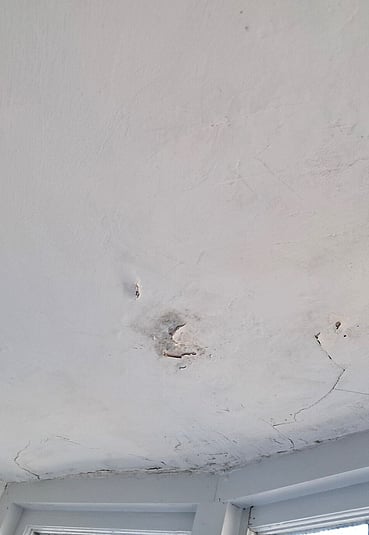
BeforeFlaking plaster and black mould
Concrete Cancer Repair and Waterproofing in Lyall Bay
The problem: Flaking plaster and black mould inside a coastal home
For years, the owner of this 100+ year-old home in Lyall Bay had been locked in a frustrating cycle of patch-and-repair. They had repeatedly paid to have the ceiling plaster in their bay window patched, only for the cracking, flaking, and ugly black mould to reappear. Living in an ocean-facing property just 100 metres from the sea, they had watched this gradual discolouration return over several years and were understandably worried about the long-term aesthetic impact and the health risks that chronic indoor mould would have on a tenant.
Previous repair attempts focused solely on the interior, as a standard surface patch is often the default approach for interior plaster. However, because this specific ceiling was made of solid concrete, the recurring damage could not be explained by a typical leaking ceiling cavity or ordinary shifting of a timber-framed house. A proper fix required finding out exactly why moisture kept returning to the substrate.
Our observation: Decades of coastal weathering and hidden concrete cancer
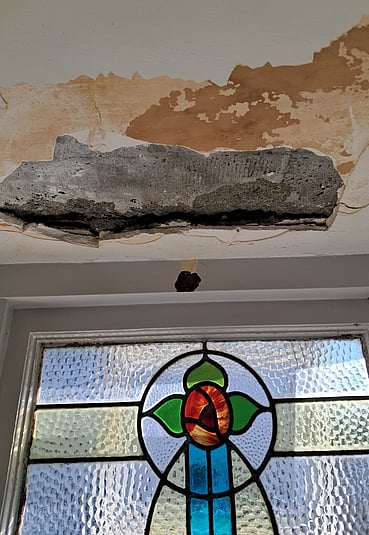
We removed the loose, browned, failing plaster to investigate the concrete underneath and noted a classic example of why a building must be evaluated as a complete, interconnected system:
1. Internal moisture and rusting reinforcement steel
Once the surface plaster was cleared away, we found deep dampness, brown staining, and evidence of rust. In a concrete ceiling, rust indicates that external moisture has managed to reach the internal reinforcing steel mesh. When steel rusts, it expands, putting immense internal pressure on the concrete, forcing it to fracture. The cracked concrete then caused the surface plaster to blow out and flake away over time.
2. Severe coastal exposure on the exterior roof
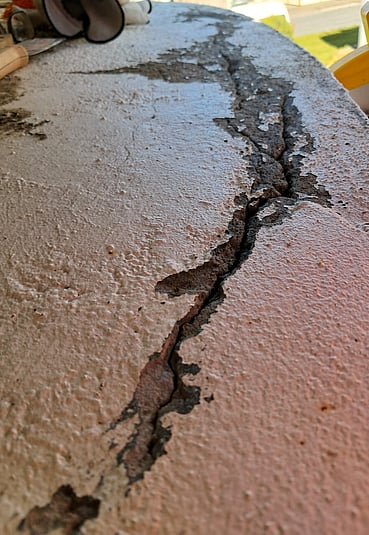
Investigating outside on top of the bay window roof revealed the root cause. Over a century of exposure to intense marine UV and relentless, salt-laden southerly storms had broken down the old external paint coatings. The unprotected concrete roof had eventually developed tiny structural cracks.
3. A slow, decades-long case of coastal "concrete cancer"
Concrete, especially old concrete is porous. Concrete cancer happens when water and oxygen penetrate the concrete, reach the steel reinforcement bars, which then rust and will expand up to six times their original thickness. This expansion creates immense internal pressure, forcing the surrounding concrete to fracture and break off.
Simply re-plastering the interior ceiling again would only cover up the symptom for another year or two before the moisture seeping from the concrete above would cause the render and plaster to fail once more.
The solution: An exterior membrane, UV protection, and interior plaster restoration
Following our philosophy of addressing the underlying cause rather than masking the symptom, we carried out a systematic remediation to weatherproof the building from the outside in.
Concrete crack repair
While some cracks were visible, many others were not. After removing all paint and cleaning the surface, we applied concrete adhesive and cement based render to penetrate and fill cracks that may have been too small to see.
Heavy-duty exterior membrane application
We then applied a sturdy, acrylic waterproofing membrane across the entire top surface of the bay window. This completely sealed the structural concrete, creating an impenetrable barrier against Wellington's harsh rain, and corrosive coastal salt spray. We then coated the membrane with highly UV-resistant paint.
Internal concrete treatment and re-plastering
Moving inside, we treated the affected ceiling concrete to halt any further moisture damage. Once the structure was verified completely dry, we applied a cement-based render, then re-plastered the entire bay window ceiling, meticulously shaping the plaster to match the original character lines of the 100-year-old alcove.
Premium interior painting and finishing
With the plaster fully cured, we applied a high-quality primer and two durable interior topcoats to seamlessly blend the repair into the surrounding room.
The result: A permanent, practical finish
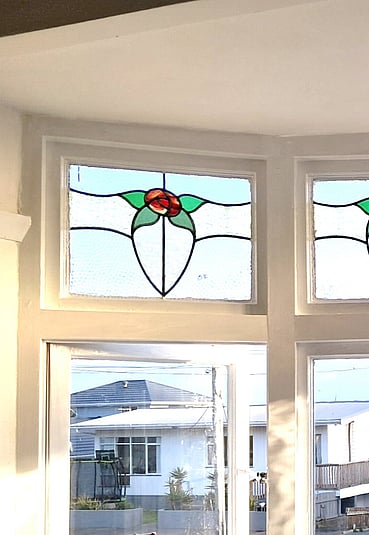
The finished bay window is now completely structurally sound, pristine, and fully protected against the elements. The owner was pleased with the outcome, noting:
"We’ve had a couple of storms since then and no sign of a problem. The maestro did it!"