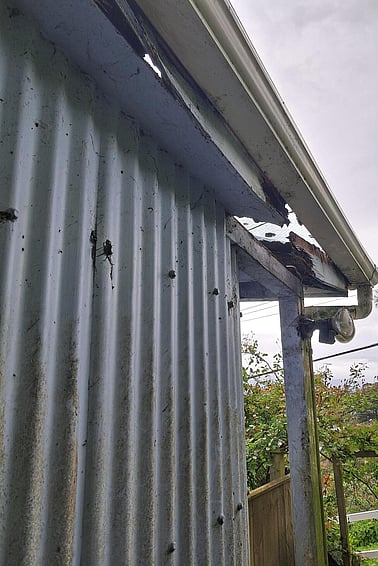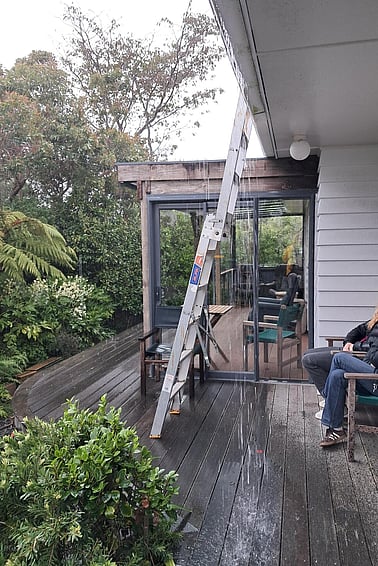
Gutters overflowingBlocked gutters are often difficult to see from the ground, and may only become evident in heavy rain.
Gutters, GVBs and Drainage in Wellington
GUTTERS, DRAINS & GROUND VAPOUR BARRIERS IN WELLINGTON
Drainage - the quiet work of keeping water where it belongs
A home's system of exterior drainage - gutters, spouting, drains and moisture barriers - has a simple job: to prevent rainwater from the roof and surrounding ground from entering your home, and to carry it safely away. If any part of that system is missing, becomes blocked, damaged or is poorly configured, water will find its own path, ending up where it shouldn't - around walls, foundations and inside the house.
That can mean overflowing gutters, saturated soffits and fascia, staining, damp walls, pooling, or water collecting around foundations. The resulting dampness makes the home harder to heat, can cause mould and rot, and shortens the lifespan of other work such repainting or plastering. Since water penetration is often gradual, it is easy to miss until more serious problems emerge.
Southerleigh maintains, repairs and improves your home's drainage and water barrier system, helping keep Wellington's rainwater on the outside of your home.
Helping water go where it needs to
There are several ways unwanted moisture can reach a house - from the roof, from the ground around it, and even as vapour rising from damp soil beneath it. Southerleigh deals with these different sources by cleaning, repairing and improving the systems that collect, redirect and prevent water from reaching a home.
1. Cleaning gutters
Wellington's wind and abundant vegetation mean gutters collect soil, leaves, needles, moss and all sorts of other plant debris. Cleaning them is simple, but not easy. Gutters are often high, difficult to access and impossible to inspect properly from the ground. As a result, cleaning is easily put off, perhaps until grass or weeds can be seen growing over the top. By then, debris may already be restricting the flow of rainwater and causing gutters to overflow during heavy rain, potentially saturating fascia, soffits and walls.
2. Gutter repairs and adjustments
Guttering doesn't necessarily stay as it was installed. Movement, wind and prolonged UV exposure can cause joints to fail, brackets to sag and sections to lose their alignment or fall. Water that once flowed smoothly can then pool, overflow or leak at the joints. Repairs and adjustments can often restore the system without replacing guttering that is otherwise sound.
3. Maintaining and installing exterior drains
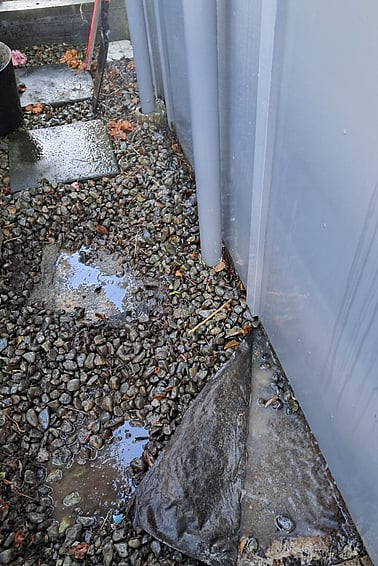
Water can accumulate around a house at ground level when drains are blocked, inadequate or missing altogether. This water can seep beneath the building and come into contact with cladding, foundations and other building elements, exposing them to prolonged dampness. Adequate drainage around the building helps minimise the amount of water these elements are exposed to and reduces the risk of moisture-related damage.
4. GVBs & below-ground membranes
Water doesn't only move downwards — moisture can also move upwards from damp soil beneath a house. Without a GVB (ground vapour barrier), moisture released from the soil can accumulate beneath the floor and contribute to damp conditions in the subfloor space. This is especially the case if surrounding drainage is poor. Similarly, walls or brickwork that extend below ground level can absorb moisture from the surrounding soil unless they are adequately protected. Southerleigh installs ground vapour barriers and appropriate membranes to below-ground walls or masonry in order to help prevent moisture from entering the building through these less obvious routes.
With gutters, the challenge is height
Most gutter repairs are straightforward — but reaching them might not be. At this Wadestown property, the extreme height ruled out using a ladder, narrow access made it impossible to bring a mobile EWP (elevated work platform) around the house, and scaffolding would have been a slow and expensive access solution for what was ultimately a small gutter repair.
Southerleigh reached the gutter from the roof using appropriate fall-arrest equipment and personnel trained to work at heights. By matching the access method to the job (and waiting for a not-so-windy day) we could carry out the repair safely, at a reasonable cost and with minimal disruption.
The warning signs are there if you look
Look for these signs and. if necessary, grab an umbrella and check out what's happening the next time there's heavy rain.
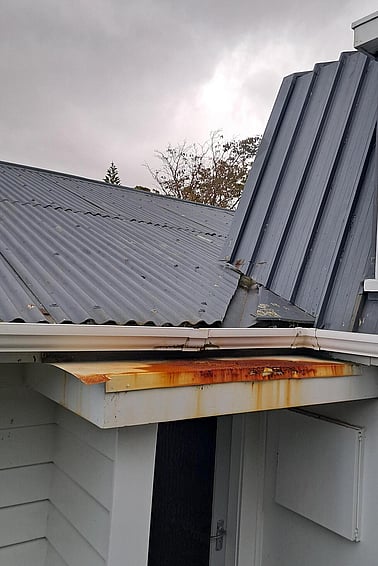
Paint failure, staining, moss or dampnessAround the internal (house facing) edge of gutters, fascia and soffits