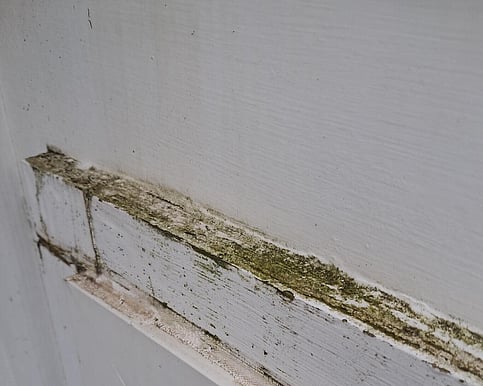
MouldTelltale mould on the exterior of the frame indicates chronic dampness.
A House Window Repair for Leaks & Wet Rot Around New Double Glazing
The problem: A double-glazed window, just three years old, leaks water
Investing in new double-glazed windows is supposed to make a home warmer, drier, and healthier. Unfortunately, for this homeowner, a double-glazing window leak appeared less than three years after installation. All the owner knew at the time was that water was actively leaking into his child's bedroom during southerly rain, accompanied by the worrying appearance of black mould along the wall lining.
Concerned for his family's health and puzzled that a relatively new renovation was letting in water, he was unwilling or unable to contact the original installer.
Our observation: Missing flashing, degraded sealant, and extensive hidden rot
We took a look at the window and found that the original installer had cut some critical corners, masking severe underlying issues:
1. Cracked, unpainted sealant
The previous installer relied solely on a bead of sealant to keep water out above the window. Because it was left unpainted, UV exposure had caused the sealant to become chalky, crack, split, and separate from the timber, creating a direct pathway for water to enter the wall cavity.
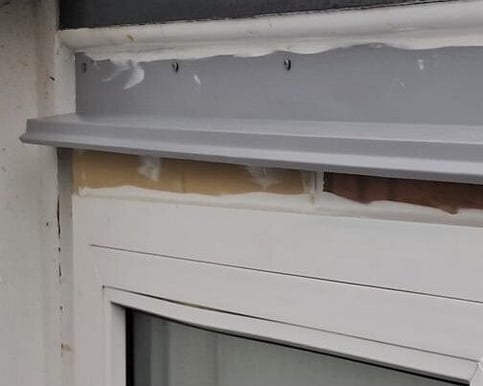
2. No head flashing
There was no physical metal or PVC head flashing installed above the window frame. Without a flashing to deflect water away from the joinery, running rainwater from the cladding above washed directly into the vulnerable gap behind the window, feeding the internal leaks and mould growth.
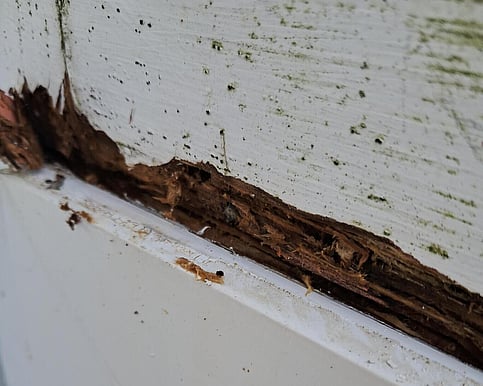
3. Covered-up wet rot
Upon closer inspection, we fond extensive rot - far more than would be expected in just three years. This mean that the window installation contractor had put the new window directly into an old, already partly-rotted timber frame. Deprived of air and constantly fed by the missing flashing leak, the wet rot had continued to compromise the surrounding timber, turning it into soft, fibrous pulp and enabling water to leak through to the internal wall.
The double-glazed window itself was fine; bad installation was the cause of the leak.
The solution: Timber remediation, flashing, and weatherproof sealing
For this house window repair to be lasting and effective, our handyman removed the decay, treated the opening, and introduced a multi-layered weatherproofing system.
Cut out and replaced the rotted timber
We carefully excavated all of the soft, compromised wood around the window head and jambs. We cut back to sound, healthy structural timber, treated the remaining areas with a high-quality timber preservative, and spliced in treated timber replacement sections to restore full structural integrity to the opening.
Retrofitted a custom metal head flashing
To ensure water can never pool above the joinery again, we retrofitted a robust, custom-formed metal head flashing over the window frame. This extends out over the window joinery, mechanically deflecting rain outward and away from the building envelope.
New exterior sealant
We stripped out the old, UV-damaged sealant and applied a high-performance, flexible MS polymer.
The result: A dry, healthy bedroom with full benefit of double-glazing
By fixing the structural root causes rather than just patching over the surface, we stopped the leaks permanently and eliminated the moisture source driving the black mould growth. The child's bedroom is now fully protected by a proper mechanical drainage path and durable, UV-shielded weather seals.
Your home operates as a complete system
A successful double-glazing upgrade involves much more than just swapping out the window. A true, lasting house window repair or upgrade requires evaluating the entire opening: the condition of the surrounding timber frame, weather protection of joins and UV protection (ie. properly painting) of the seal and adjoining weatherboards. Failing to do all this means an investment in new windows may not deliver it's full value for very long.